Trending

Most readers decide about a sea story before the first wave breaks. They read three sentences, maybe four, and either they are in the boat with you or they are gone. That is not a reason to panic. It is a reason to be deliberate.
Three sentences is enough room to put a reader on the water, give them a body to inhabit, and make them need the fourth sentence. What follows is a working method: how to build those three sentences, how to test them, and how to fix them when they lie flat on the page. No storm required. No shipwreck, no talking gull. It only requires attention to what a reader's senses do in the first ten seconds.
An opening is not a summary. It is a physical experience followed by an unanswered question. Before you draft, decide which of these three jobs your opening is doing, because a reader needs at least two of them to keep going:
When an opening feels inert, it is usually doing the first job carefully and the other two not at all. You get a handsome description of a harbor and no reason to care whether anyone in it drowns.
This is not a formula to obey forever. It is a scaffold that teaches you where the weight belongs.
Start with a person doing something in a physical place. Not "the sea was calm" but a hand on a rail, a foot on a wet deck, a bucket hauled up with something in it. Concrete nouns and active verbs do the work that adjectives cannot. If you can point a camera at it, the sentence is probably earning its place.
Widen by one notch. Give a detail that reveals what this person wants, fears, or has already lost. One clause is usually enough; three sentences of backstory will bury the motion you just built. The best second sentences feel casual and are not.
Something shifts. A sound that should not be there, a sighting, a decision, a small lie told to a person who will remember it. The turn does not have to be dramatic. It has to be irreversible enough that the reader wants to see what happens next.
The deck was still slick when Aoife came up from the galley, and the horizon had moved. She had promised her brother she would bring the boat home with the same number of crew. Then the radio coughed, and the voice on it was not the coastguard's.
Three sentences. You know where she is, what she is carrying, and that the situation just changed. Nothing has been explained, and that is the point.
Most weak sea openings fail in one of a few familiar ways. Learn to recognize them in your own drafts before a reader does.
Now the repairs. Each weak version below contains the same information as the revision; only the emphasis has changed.
Weak: The storm was terrible. Waves crashed against the boat. Everyone was scared.
The wave came over the rail so fast that Tomas tasted salt before he saw it. He counted the crew twice and got two different numbers. The radio had been dead since noon.
Weak: The sea was beautiful at sunset. Maria stood on the deck and thought about her life.
The engine quit somewhere past the second buoy, and the silence arrived before the smell of petrol did. Maria kept her hand on the tiller as though it might still answer her. Behind the stern, the harbor lights were already too far to swim to.
Notice what changed. The revisions are not more dramatic. They are more specific, and they put a person in the middle of a situation that has already begun.
"The sea smelled salty" tells a reader nothing they did not already know. "The smell of diesel and low tide" tells them where they are standing. That is the whole difference between decoration and information.
Sea settings are generous to writers who pay attention. Cold water has a temperature on the wrist. A small boat has a pitch and a roll you can feel in the sentence's rhythm. Rope has a texture when it is wet. Sound travels strangely over water, so a voice can arrive before the person does. Smell and touch are underused in sea fiction, and they are the fastest way to make a reader believe in a boat.
Restraint matters as much as accuracy. One precise noun will outperform three vague adjectives every time. If you have written "vast, glittering, endless ocean," you have written nothing a reader can hold. Pick the one detail that belongs to this boat, on this morning, with this person aboard.
A fourth test, less technical but useful: hand the three sentences to someone who does not read much. If they ask a question about the story rather than commenting on the writing, you have done your job.
Set a timer for fifteen minutes and draft three versions of the same opening. Begin the first with an action already underway, the second with a line of dialogue that lands mid-argument, and the third with a small strange detail your narrator cannot yet explain. Do not polish any of them. Come back the next day and read all three cold.
Keep the one with the most physical specificity, even if it is the least elegant. Then write sentence four, and sentence five, and stop worrying about the opening entirely. Its only job is to get the reader past the decision to stay. Once they are aboard, the water will do the rest.
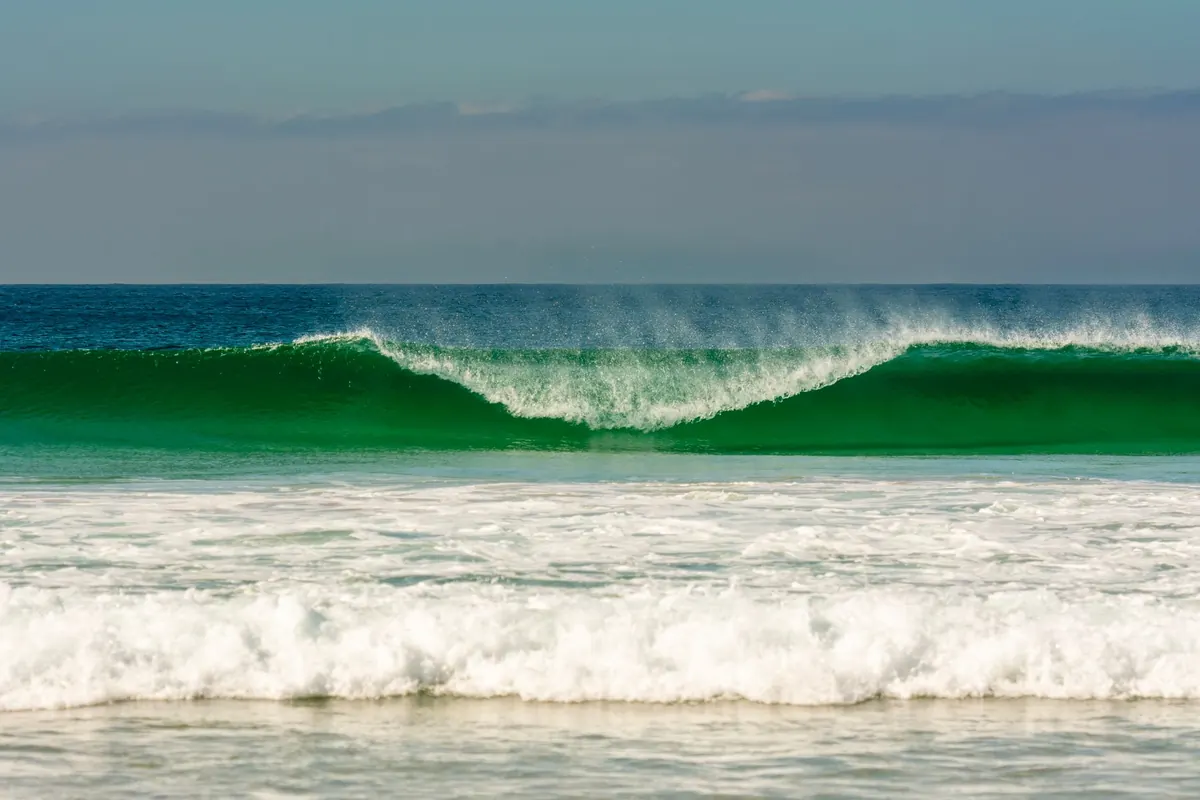
Photo: Jan van der Wolf / Pexels